
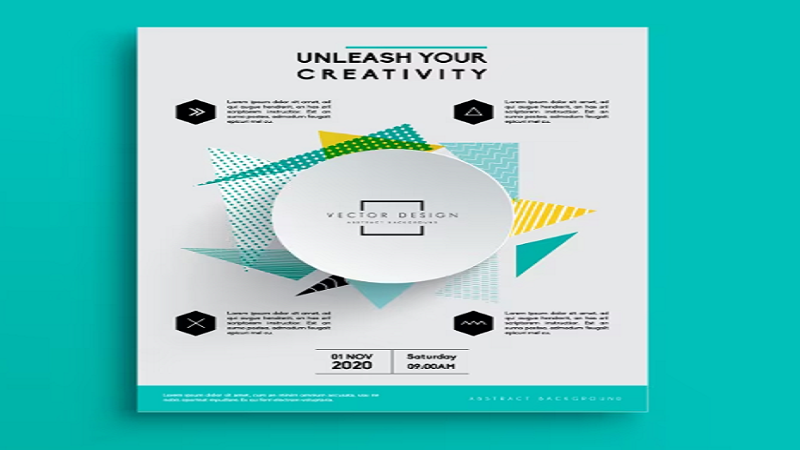
A great poster can make people stop, look, and remember your brand. Even with social media and digital advertising dominating modern marketing, posters still have a place in a strong visual strategy. A 2025 VistaPrint survey found that 79% of U.S. respondents had noticed a business poster within the previous six months, showing that print can still attract meaningful attention.
The challenge is creating something that feels modern rather than generic. Fortunately, you don’t need to spend hours working from a blank canvas. An AI poster tool to save time can help you explore layouts, visual concepts, typography, and variations quickly, leaving you more time to focus on the message and brand identity.
Whether you’re promoting an event, launching a product, announcing a sale, or simply building brand awareness, the right poster design can turn a simple message into a memorable visual experience. Here are 10 creative ideas worth trying.
- Go Bold with Minimalism
Minimalist posters prove that you don’t need dozens of design elements to attract attention. Use:
- One strong headline
- One primary image
- Two or three brand colors
- Plenty of white space
- A simple call to action
This approach makes your main message immediately visible. Research presented at the 2025 European Marketing Academy conference found that perceptual structure has a positive effect on engagement and business performance, while visual complexity can make information harder to process.
- Make Typography the Hero
Instead of relying on photography, let typography become the main visual element.
Try oversized headlines, contrasting font weights, or creative text placement. For example, a fitness brand could use a huge word like “MOVE” as the central design element, with supporting information positioned around it.
Keep your font selection controlled. Two complementary typefaces are usually enough for a professional result.
- Create a Striking Product Poster
Launching a new product? Put it front and center.
Use a clean background, dramatic lighting, and a short benefit-focused headline. Rather than listing every product feature, highlight the one thing you want customers to remember.
A simple structure works well:
Product image → key benefit → supporting detail → CTA
This hierarchy allows viewers to understand the poster quickly.
- Experiment with Unexpected Color Combinations Color is one of the fastest ways to make a poster feel distinctive.
Instead of automatically choosing the colors commonly associated with your industry, experiment with unexpected combinations that still complement your brand identity.
For example:
- Deep blue + bright orange
- Purple + soft yellow
- Green + coral
- Black + electric blue
VistaPrint’s 2025 survey found that 41% of respondents were attracted to bright or contrasting colors in business posters.
The key is contrast without creating visual chaos.
- Use Editorial-Style Photography
Give your poster the appearance of a magazine cover.
Choose one high-quality photograph and combine it with elegant typography, generous spacing, and a strong headline. This style works particularly well for fashion brands, restaurants, travel companies, creative agencies, and lifestyle businesses.
Avoid using generic stock photos whenever possible. Original graphics were reported as one of the most frequently used visual content formats by marketers, suggesting that distinctive visuals can help brands differentiate themselves.
- Turn Data into an Infographic Poster
Have an interesting statistic, survey result, or industry insight? Turn it into a visual story. Instead of writing:
“Customer satisfaction increased by 37%.”
Make 37% the largest element on the poster, then use smaller text to explain what it means. This approach works especially well for:
- Technology companies
- Financial brands
- Educational organizations
- Healthcare businesses
- B2B companies
Data-driven visual content can communicate complicated information much faster than a paragraph of text.
- Design an Interactive Poster with a QR Code Modern posters don’t have to end with the printed page.
Add a QR code that sends people to:
- A product page
- Event registration
- A discount
- A video
- Your social media profile
- A downloadable guide
A recent VistaPrint survey found that QR codes can encourage action when people understand that there is something valuable behind the scan.
Make the benefit clear. Instead of simply writing “Scan here,” try “Scan for 20% off” or “Scan to reserve your seat.”
- Use an Oversized Image
Sometimes one dramatic visual is all you need.
Choose an image that fills most of the poster and place a short headline over it. This approach works particularly well when the photograph itself tells part of the story.
For example, a coffee brand could use a close-up image of freshly brewed coffee with only three words:
“Your Morning Starts Here.”
Keep supporting information small and organized so the main visual remains dominant. 9. Create a Poster Series
Why stop at one poster?
Create a collection using the same colors, typography, and layout while changing the central message or image. Poster series are excellent for product launches, event promotions, educational campaigns, and seasonal marketing.
For example:
Poster 1: Meet the Problem
Poster 2: Discover the Solution
Poster 3: See the Results
A consistent visual system makes separate posters feel like parts of one campaign. 10. Combine AI Concepts with Human Creativity
AI can dramatically speed up the early stages of poster design. Instead of experimenting manually with dozens of layouts, you can use AI-assisted design tools to generate starting points and explore different creative directions.
However, don’t simply accept the first design.
Use AI for:
- Initial concepts
- Layout variations
- Background ideas
- Typography combinations
- Visual inspiration
- Rapid revisions
Then apply your own judgment to refine the final result. Your brand voice, audience knowledge, and creative decisions should remain at the center of the process.
How to Make Your Poster More Effective
A beautiful design isn’t enough if people cannot understand it quickly. VistaPrint’s research found that 43% of respondents said too much text makes them ignore a poster, while 37% pointed to hard-to-read fonts.
Before publishing, ask yourself:
- Can someone understand the main message in a few seconds?
- Is the headline readable from a distance?
- Is there enough contrast?
- Does the design match my brand?
- Is the CTA obvious?
- Does the poster work on mobile if shared digitally?
If the answer to these questions is yes, you’re on the right track.
Final Thoughts
Modern poster design is all about balancing creativity with clarity. Whether you choose bold typography, minimalist layouts, dramatic photography, data visualization, QR codes, or a complete poster series, your goal should always be the same: communicate one memorable idea quickly.
AI-assisted design tools can make experimentation much faster, but the strongest posters still come from understanding your audience and having a clear brand message. Start with one of these 10 concepts, test different variations, and use performance data to discover what resonates.
With the right combination of strategy, creativity, and smart design tools, your next poster can do much more than look good it can capture attention and turn that attention into meaningful action. See More